Periodontal curettage in Uzbekistan
Prices from 150 000 UZS. Book online — instant request number, free.
- Free
- Instant request number
- 1455 clinics in the catalog
- Bleeding or swollen gums, or regular bleeding when brushing teeth.
- Periodontal pockets deeper than 3 mm found during diagnosis.
- Persistent bad breath or tartar build-up under the gum line.
- Receding gums, exposed tooth necks or slight tooth mobility.
- A diagnosis of chronic periodontitis or the need for supportive maintenance care.
Online booking
Book online: periodontal curettage
Pick a day and time — you get a request number instantly.
We match a clinic and call you back
Choose a time- Free
- Instant request number
- Telegram reminder
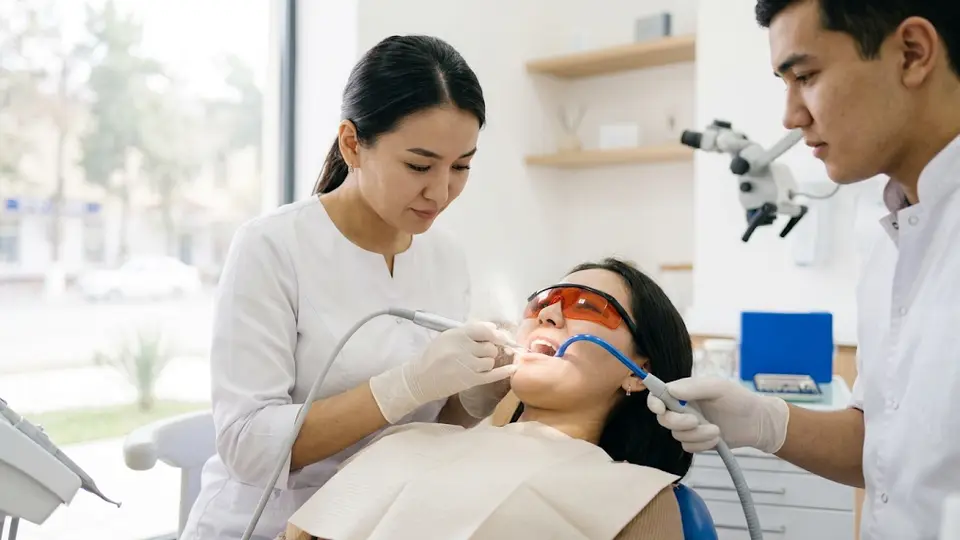
Periodontal curettage (deep cleaning) is a treatment procedure that removes tartar, bacterial plaque and inflamed tissue from the gum pockets and the root surface of the tooth. It is performed to stop chronic gum inflammation (periodontitis), reduce pocket depth and lower the risk of tooth mobility. The outcome usually depends on the stage of the disease and the individual situation.
- 1
Consultation and diagnosis
The dentist examines the gums, measures pocket depth with a special probe and orders an X-ray if needed.
- 2
Local anaesthesia
The treatment area is numbed with local anaesthesia so the procedure is comfortable.
- 3
Cleaning the pockets
Tartar, bacterial plaque and inflamed tissue are removed from the pockets with hand instruments or ultrasound.
- 4
Smoothing the root surface
The root surface is smoothed, which makes it harder for bacteria to reattach and helps the gum reattach to the tooth.
- 5
Aftercare and follow-up
The dentist gives home-care advice and schedules a follow-up visit to assess how the gums are healing.
- Check whether the clinic has a periodontist and performs pocket-depth charting (a periodontal map).
- Make sure the clinic can do X-ray or 3D imaging for diagnosis before treatment.
- Ask whether the treatment plan, pricing and follow-up schedule are explained upfront.
- Confirm the sterilisation standards and whether ultrasonic or modern instruments are used.
Choose a clinic
Pick a clinic for Periodontal curettage — 1455 clinics in the catalog.
Clinics offering Periodontal curettage
List compiled from 2GIS/OpenStreetMap categories and names — confirm the service and price with the clinic.
FAQ
Is curettage painful?
The procedure is done under local anaesthesia, so it is usually not painful during treatment; mild sensitivity for a few days afterwards is possible.
How long does the procedure take?
One session usually takes about 30–60 minutes, depending on the number of teeth and the depth of the pockets.
How long is recovery and what should I do afterwards?
The gums usually settle within a few days; during this time soft food, gentle hygiene and following the dentist's advice are recommended.
How many sessions will I need?
It depends on the degree of inflammation: mild cases may need one session, while more advanced cases can require several visits and maintenance care.
How long do the results last?
The result largely depends on daily oral hygiene and regular check-ups; with good care it can last a long time.
Is curettage a surgery?
Closed curettage is a minimally invasive procedure without cutting the gum; in deep cases the dentist may recommend an open method.