How Long Do Implants, Crowns, and Veneers Actually Last?
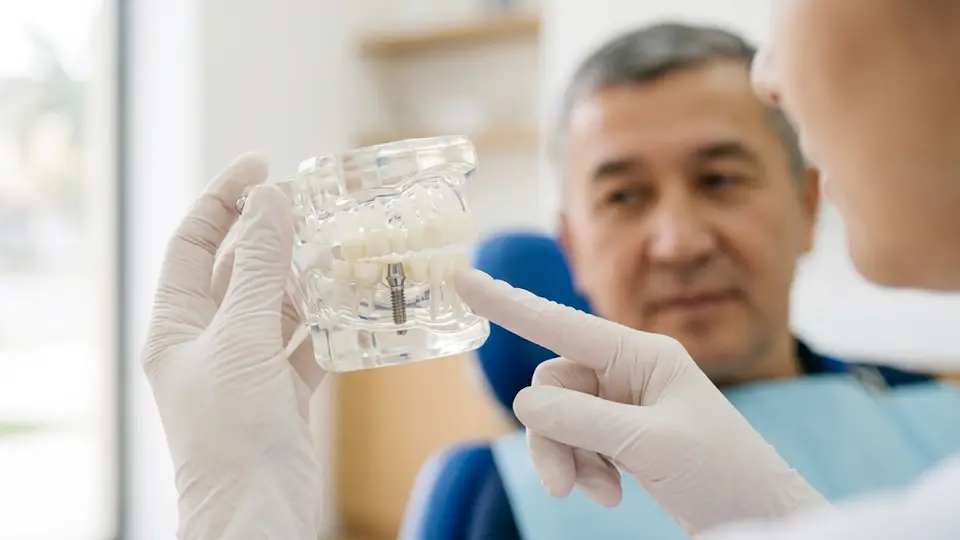
A dental implant that integrates well with the bone and receives proper daily care can last for decades — many patients go 15–20 years or more without needing to replace the titanium post itself. Crowns typically need replacing after 10–15 years, while veneers generally last 7–12 years. That said, every prognosis depends on the individual patient's clinical situation, the quality of materials used, and how consistently they maintain their oral hygiene.
The single biggest factor in implant longevity is not the brand or even the clinic — it is aftercare. An implant is an artificial titanium root that cannot develop cavities, but the surrounding gum and bone are vulnerable to inflammation known as peri-implantitis. Daily cleaning with interdental brushes or floss, using a water flosser, and visiting a hygienist every six months significantly reduce the risk of complications. Smoking, poorly controlled diabetes, and bruxism (teeth grinding) can all noticeably shorten the expected lifespan of any dental restoration.
The crown — the visible part sitting above the implant or covering a natural tooth — is what wears out first. Metal-ceramic crowns (from 1.2 to 3.5 million soum) can chip or develop darkening at the margins over time. Zirconia crowns (from 2.8 to 7.8 million soum) are more resistant to wear and tend to stay aesthetically stable for longer. Even the toughest crown, however, will fail ahead of schedule if a patient regularly cracks nuts with their teeth, grinds at night without protection, or skips routine check-ups.
Veneers — thin ceramic or composite shells bonded to the front teeth — are especially sensitive to dietary habits. They are not designed for biting into hard foods like crusty bread, whole apples, or ice, and dark beverages left sitting on the surface without rinsing can stain the margins. Ceramic veneers (from 2.5 to 9 million soum) generally outlast composite ones, though both require a careful adjustment period in the early months while the patient adapts to the feel of the new surfaces.
The patient's own role in longevity cannot be overstated. Those who attend preventive check-ups twice a year are, in practice, far less likely to need early replacement of a restoration. A hairline crack on a crown or early inflammation around an implant, caught at a routine visit, can be addressed with minimal intervention — whereas a neglected problem may eventually require complete replacement of the entire structure.
If you are considering implants in Tashkent, the Dentum catalogue lets you compare clinics by rating and patient reviews, which can help you find a specialist you feel confident in. The exact treatment plan, prognosis, and cost — implants in Tashkent range from 3 to 12 million soum for the implant itself, with a full turnkey restoration running approximately 4.5 to 28 million soum depending on the brand and crown material — are determined by the dentist after an in-person examination and, as a rule, a 3D CT scan. Book a consultation to get a clear picture of your specific situation.
Can you extend the lifespan of a dental implant?
In most cases, yes. Consistent daily hygiene with a water flosser, professional cleaning every six months, and not smoking all significantly reduce the risk of peri-implantitis. If you grind your teeth at night, a custom night guard protects both the implant and the crown sitting on top of it. Your treating dentist can give you precise recommendations based on your own clinical picture.
When does the crown on an implant need to be replaced?
There is no fixed deadline — a crown is replaced when it loses its seal, chips, wears down significantly, or no longer meets the patient's aesthetic expectations. With regular check-ups, a dentist will spot early signs of wear and suggest replacement before complications arise. On average this point comes somewhere around the 10–15 year mark, though many patients find their crown lasts considerably longer.
Are veneers a permanent solution?
Not exactly — veneers are fixed restorations but they are replaceable. Ceramic veneers outlast composite ones, yet all veneers will eventually need refreshing, typically somewhere in the 7–12 year range, though that window depends heavily on care and eating habits. It is important to understand that the underlying tooth is lightly prepared before veneers are bonded, so removing them and returning the tooth to its original state is not an option.
What affects the cost of an implant in Tashkent?
The price is made up of the implant brand, the type of abutment, and the crown material — a zirconia crown costs more than a metal-ceramic one. A rough guide for a complete turnkey restoration is 4.5 to 28 million soum, while the implant post itself runs from 3 to 12 million soum. If bone volume is insufficient, additional procedures such as bone grafting (from 2.5 to 7 million soum) or a sinus lift (from 3 to 6 million soum) may be needed, which affects the overall total.
Online booking
Book an implant consultation
Pick a day and time — you get a request number instantly.
We match a clinic and call you back
Choose a time- Free
- Instant request number
- Telegram reminder