Dental Implants with Insufficient Bone: Sinus Lift in Tashkent
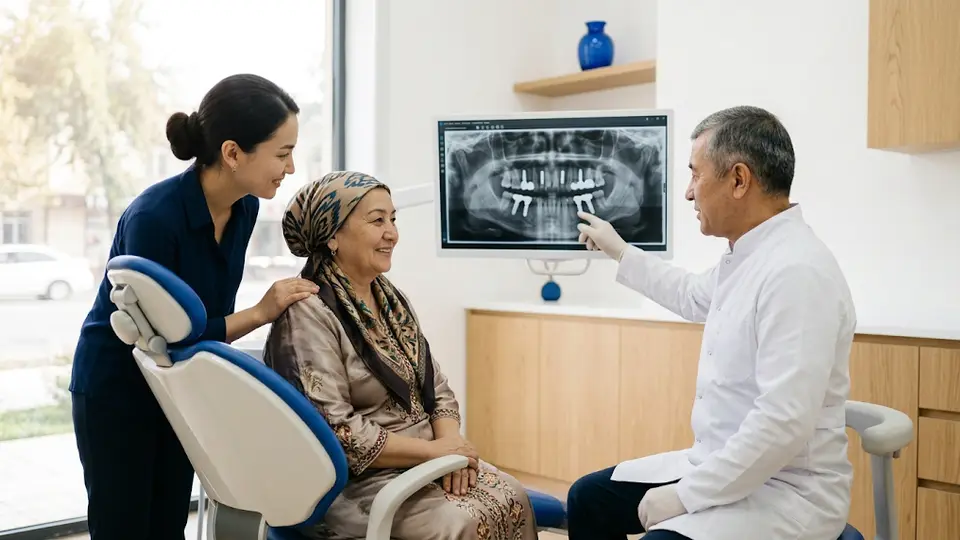
When upper back teeth have been missing for a long time, or when the sinus floor sits naturally close to the jaw ridge, there may not be enough bone height to anchor a dental implant securely. A sinus lift — also called sinus augmentation — solves this by elevating the sinus membrane and packing bone graft material into the space created. In Tashkent, the procedure costs from 3 to 6 million soum per side. The full «implant-to-crown» treatment (implant + abutment + crown) will vary depending on the clinic and materials chosen; the exact plan and final price are determined by the doctor after examination and a CT scan.
There are two main surgical approaches. The open (lateral) sinus lift is used when remaining bone height is very limited — typically under 4–5 mm. The surgeon makes a small opening in the gum, carefully lifts the sinus membrane, and fills the space with bone grafting material. The implant is then placed either at the same time or after a healing period, depending on each patient's clinical situation.
The closed (crestal) sinus lift, sometimes called a «gentle» sinus lift, is performed through the same channel drilled for the implant when there is enough residual bone to do so safely. Because it is less invasive, this technique usually allows the implant to be inserted during the same visit. The choice between open and closed approaches is made by the implantologist based on CT imaging — there is no universal rule.
After an open sinus lift, bone maturation before implant placement typically takes 4 to 9 months. With the closed technique, the stages can often be combined, shortening overall treatment time. From first consultation to the final permanent crown, upper-jaw implantation involving a sinus lift generally spans 6 to 14 months in total; the exact timeline depends on the extent of surgery, the patient's overall health, and the treatment protocol selected.
It is worth knowing that not every case of bone deficiency calls for a sinus lift. In some situations the clinician may recommend zygomatic implants, short implants, or a different type of bone augmentation as a more suitable alternative. Every decision is made individually. If you notice significant facial swelling, a rising temperature, or difficulty breathing after surgery, seek medical attention immediately.
The Dentum catalogue lets you browse and compare Tashkent clinics specialising in implantology by rating and patient reviews — a practical first step before booking a consultation. If you have been told you do not have enough bone for an implant, there is no need to delay: modern techniques address this problem in the majority of cases, and a CT scan will give your doctor all the information needed to recommend the right path for you.
Can implants be placed without a sinus lift even when bone is insufficient?
In some cases, yes. The clinician may suggest short implants or zygomatic implants, which bypass the need for bone grafting altogether. However, this is not always an option: the decision depends on sinus anatomy, the remaining bone height, and the overall condition of the patient's jaw. Only a CT scan and a consultation with an implantologist can provide a definitive answer.
Is a sinus lift painful?
The procedure is performed under local anaesthesia, so discomfort during the operation is minimal in most cases. Once the anaesthetic wears off, some swelling and tenderness in the treated area are a normal tissue response. Your doctor will provide post-operative guidance to help make the recovery period as comfortable as possible.
How much does a sinus lift cost in Tashkent?
A sinus lift in Tashkent costs from 3 to 6 million soum per side. The total treatment budget also depends on the implant itself (from 3 to 12 million soum), plus the abutment and crown. An accurate cost estimate is prepared by the doctor after reviewing the CT scan and conducting a clinical examination.
How long do I have to wait for the implant after a sinus lift?
With the open technique, bone integration before implant placement typically takes 4 to 9 months. With the closed technique, the implant can often be placed in the same surgical session, which reduces the overall treatment duration considerably. The specific protocol is chosen by the implantologist based on the individual clinical picture.
Online booking
Book online: sinus lift
Pick a day and time — you get a request number instantly.
We match a clinic and call you back
Choose a time- Free
- Instant request number
- Telegram reminder