Metal-Ceramic vs Zirconia Crown: 2026 Prices and How to Choose
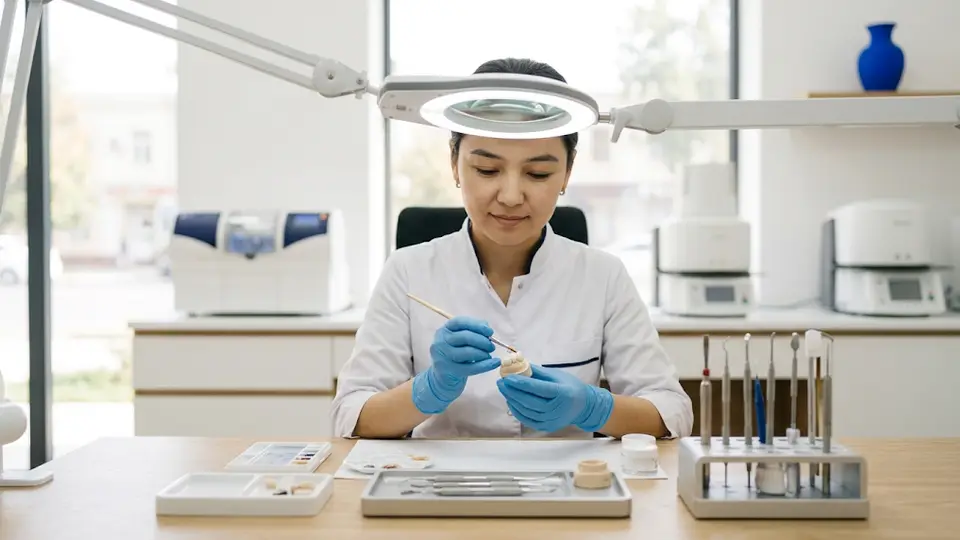
In Tashkent, a metal-ceramic crown typically costs between 1.2 and 3.5 million soum, while a zirconia crown ranges from 2.8 to 7.8 million soum. That gap reflects real differences in material, aesthetics, and structural properties — not just a brand premium. Your exact cost will depend on the tooth's condition, any preparatory work needed, and the clinic you choose; a dentist can give you a precise figure after an in-person examination.
A metal-ceramic crown has a metal substructure coated with a layer of tooth-coloured ceramic. It is strong, time-tested, and handles chewing forces well — making it a solid option for back teeth. The trade-off is the thin metal margin at the gum line, which can eventually become visible as a dark shadow if the gum recedes. For this reason, metal-ceramic is generally less suited to front teeth, particularly when the gum tissue is thin.
Zirconia — zirconium oxide — is entirely metal-free. It transmits light in a way that closely mimics natural enamel, so a well-shaded zirconia crown is virtually indistinguishable from a real tooth. That quality matters most in the front of the smile. Beyond aesthetics, zirconia is biologically inert: it does not trigger allergic reactions and sits comfortably alongside gum tissue, which is an important consideration for patients with metal sensitivities.
In terms of strength, modern zirconia is fully comparable to metal-ceramic. Full-contour (monolithic) zirconia blocks withstand heavy bite forces and work well on molars. Thinner, more translucent «aesthetic» zirconia variants are often reserved for front teeth, where lifelike appearance takes priority over maximum bulk strength.
So when does the higher price of zirconia make sense? As a general rule, in several situations: the tooth is visible when you speak or smile; you have a known allergy or intolerance to metal; the gum line is thin and the risk of a dark margin showing through is real; or several adjacent crowns are being placed and visual consistency matters. For molars tucked away at the back, metal-ceramic remains a practical and cost-effective choice — unless the dentist identifies specific clinical reasons to go a different route.
When comparing clinics in Tashkent, look beyond the price list: find out whether the lab uses a modern milling machine, check the dentist's experience with aesthetic restorations, and ask which crown brands and materials are on offer. The Dentum directory lets you browse Tashkent clinics by rating and patient reviews, which helps you quickly make sense of the many options available.
The bottom line: if budget is a priority and the tooth in question is out of sight, metal-ceramic is a reliable, proven solution. If the crown will be visible or there are contraindications to metal, zirconia justifies the extra cost. Book a consultation — the dentist will examine the tooth, assess the gum, and recommend the option that fits your specific situation.
How much does a dental crown cost in Tashkent in 2026?
A metal-ceramic crown runs from 1.2 to 3.5 million soum; a zirconia crown from 2.8 to 7.8 million soum. The final price depends on the clinic, the material chosen, how much preparatory work the tooth needs, and whether additional procedures — such as root canal treatment or a post-and-core build-up — are required. Your dentist will give you an accurate quote after an examination.
Is getting a dental crown painful?
The procedure is carried out under local anaesthesia, so the shaping of the tooth and impression-taking are usually virtually painless. Once the anaesthesia wears off, some mild sensitivity is normal and generally settles within a few days. If the discomfort intensifies or persists, it is worth going back to your dentist.
How long do metal-ceramic and zirconia crowns last?
Longevity depends on oral hygiene, bite forces, and the quality of the crown itself — no universal figure can be given without an examination. Your dentist will assess the condition of the supporting tooth and advise on the care routine that most directly affects how long the crown holds up.
Can zirconia be used on a back tooth?
Yes, in most cases monolithic zirconia is well suited to molars — it can handle significant chewing load. Whether to use a monolithic block, a layered design, or a combination is a clinical decision the dentist makes based on the individual tooth, bite pattern, and the patient's preferences.
Online booking
Book online: zirconia crown
Pick a day and time — you get a request number instantly.
We match a clinic and call you back
Choose a time- Free
- Instant request number
- Telegram reminder