Contraindications to Dental Implants: Who Should Not Get Implants
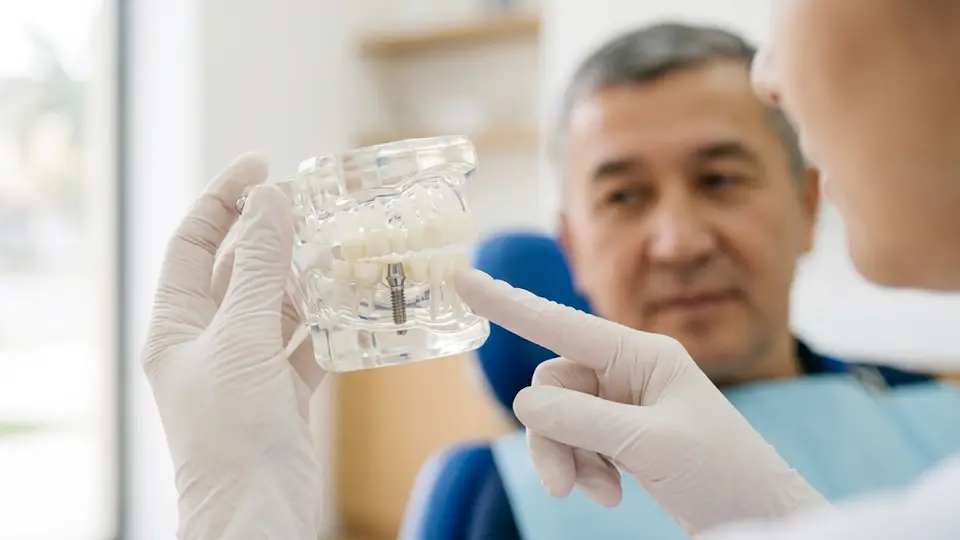
Dental implants are a suitable option for most adult patients, but certain conditions can make the procedure impossible or require preparation beforehand. Absolute contraindications are relatively rare; more commonly, the limitations are relative — meaning temporary or manageable. Only a dentist can give you a definitive answer after an in-person examination, a panoramic X-ray, and typically a 3D cone beam CT scan.
Absolute contraindications include active malignancies of the jaw and face or systemic treatments that impair bone healing; severe uncontrolled clotting disorders; decompensated immunodeficiency states; and a history of high-dose radiation therapy to the head or neck. In these situations, most specialists recommend alternative prosthetic solutions rather than implants.
Relative contraindications form the largest group and deserve careful attention. Type 2 diabetes with a glycated hemoglobin level above 8–9% significantly slows osseointegration and raises the risk of peri-implant inflammation. However, in well-controlled diabetes with stable glucose levels, implant placement is successful in most cases — the decision is made jointly with an endocrinologist. Osteoporosis reduces bone density and complicates implant integration, but it is not an automatic disqualifier: the dentist evaluates bone volume and quality from CT data and, if needed, may refer the patient for bone grafting (augmentation), which costs from 2.5 to 7 million soums. Taking bisphosphonates for osteoporosis is a serious risk factor that must always be discussed with the treating physician before any surgical planning.
Smoking is one of the most frequently asked-about topics. Nicotine constricts blood vessels, impairs bone nutrition, and roughly doubles the implant failure rate compared to non-smokers. Most clinics do not refuse smokers outright, but they clearly explain the risks and strongly recommend abstaining from cigarettes for at least two weeks before and after surgery. The final choice remains with the patient.
Temporary contraindications are conditions that, once resolved, allow implant treatment to proceed: pregnancy, acute oral infections or inflammation, decompensated chronic illnesses, post-surgical recovery periods, and the use of medications that affect blood clotting such as NSAIDs or anticoagulants. As a rule, postponing the procedure by a few weeks or months — and coordinating with the relevant specialist in advance — is all that is needed.
If implants are not suitable for you, or are not yet an option, your dentist will discuss alternatives. A dental bridge (from 1.6 to 9 million soums) is supported by adjacent teeth and requires no surgery. A removable denture (from 3 to 9 million soums) restores multiple or all missing teeth without any intervention in the bone. In cases of complete tooth loss with contraindications to conventional implants, mini-implants with lower bone load are sometimes considered — but this is always assessed on a strictly individual basis.
If you are in Tashkent and want to find out whether implants are an option for you, the Dentum catalogue lets you compare clinics by rating and reviews to find a specialist who can provide a thorough consultation and CT diagnostics. The cost of the implant itself in Tashkent starts from 3 million soums; a full turnkey package (implant, abutment, and crown) runs approximately 4.5 to 28 million soums depending on the brand and clinic. The precise treatment plan and final price are determined by the doctor after examination and review of your scans.
Can dental implants be placed if I have diabetes?
In cases of well-controlled type 2 diabetes, implant placement is possible in most situations, but it requires coordination with an endocrinologist and careful monitoring of glucose levels. With poorly controlled diabetes, the risk of implant failure increases significantly, so the condition must be stabilised first. The final decision is made by the implantologist after a full clinical assessment.
Does smoking affect how well an implant integrates?
Yes, smoking noticeably reduces blood supply to the tissues and raises the risk of inflammation around the implant, which can lead to failure. Most specialists recommend stopping smoking for at least two weeks before and after the procedure. If quitting entirely is not possible, the patient is always clearly informed of the elevated risks before proceeding.
Is osteoporosis an absolute contraindication to dental implants?
No, osteoporosis is considered a relative contraindication. The dentist evaluates bone density and volume using 3D CT imaging and may recommend bone grafting if necessary. The use of bisphosphonates requires particular attention and must be discussed with your treating physician well in advance. In a number of cases, implant placement is still possible but is planned with additional precautions.
What alternatives exist if implants are contraindicated?
The main alternatives are a dental bridge (from 1.6 to 9 million soums), which is anchored to neighbouring teeth, and a removable denture (from 3 to 9 million soums), which requires no surgical intervention. The best option depends on the number of missing teeth, the condition of adjacent teeth, and the patient's overall health. A prosthodontist will recommend the most appropriate solution after examination.
Online booking
Book an implant consultation
Pick a day and time — you get a request number instantly.
We match a clinic and call you back
Choose a time- Free
- Instant request number
- Telegram reminder