Air Flow vs Ultrasonic Cleaning: What Is the Difference?
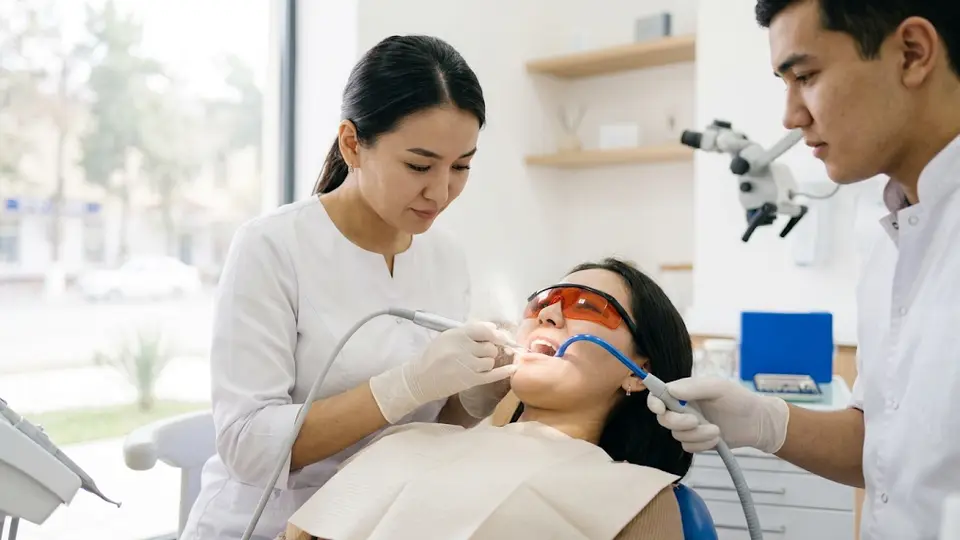
Air Flow and ultrasonic scaling are the two most widely used methods of professional dental hygiene. Ultrasound breaks down hardened deposits — tartar — while Air Flow uses a pressurised mix of water and fine powder to remove soft plaque and staining from coffee, tea, or tobacco. In practice, the two methods are most often combined within a single visit: ultrasonic scaling first, Air Flow polishing second. Professional hygiene in Tashkent costs from 0.2 to 0.9 million som; the exact figure depends on the condition of your mouth and will be confirmed by the dentist after examination.
An ultrasonic scaler works through high-frequency vibration of a small tip. That vibration efficiently shatters mineralised deposits — both above and below the gum line — that no toothbrush or powder can reach. This is why scaling typically comes first in any hygiene session. The procedure is generally well tolerated, though patients with sensitive enamel or inflamed gums may notice mild discomfort during treatment.
Air Flow is a device-based technique that delivers a controlled stream of water and polishing powder — most commonly sodium bicarbonate or glycine — under gentle pressure. The stream lifts surface pigment stains, clears plaque from interdental spaces, and cleans along the gum margin without abrasive scrubbing. Glycine-based powders are considered gentler and are suitable for use in the gingival sulcus. Air Flow does not replace ultrasound when significant tartar is present, but it is the method of choice for polishing and removing discolouration.
How do you know what you need? If it has been a long time since your last professional clean and you feel roughness along the gum line, ultrasonic scaling will most likely be necessary. If your teeth are relatively clean but have darkened from coffee or smoking, the focus will shift to Air Flow. Most modern hygiene protocols combine both methods in one appointment, so framing them as «better» or «worse» misses the point — they complement each other rather than compete.
Certain situations call for extra caution or prior consultation before either method is used: having a cardiac pacemaker (a known contraindication for ultrasonic devices), active gum inflammation with bleeding, recent restorations, or porcelain veneers (Air Flow powder can affect the polish at restoration margins). For pregnant patients, professional cleaning is generally performed after the first trimester and in agreement with the treating clinician. These are all good reasons to let a specialist choose the approach rather than deciding on your own.
To find a suitable dental clinic in Tashkent, the Dentum catalogue lists practices with patient ratings and reviews, making it easier to choose with confidence. The takeaway is straightforward: Air Flow and ultrasonic cleaning are partners, not rivals. Book a hygiene consultation, and your dentist will select the right combination based on the actual state of your teeth and gums.
Can Air Flow be used on sensitive teeth?
In most cases, yes — particularly when a glycine-based powder is used, as it acts more gently on enamel and gum tissue. If sensitivity is pronounced, the clinician can reduce the working pressure or switch to an alternative powder formula. The right approach is confirmed after a clinical assessment.
How often should I have professional dental cleaning?
The standard recommendation is every six months, but patients who build tartar quickly or have periodontal disease may be advised to come in every three to four months. The appropriate interval is determined individually based on each patient's clinical situation.
Does ultrasonic scaling hurt?
How the procedure feels depends on tooth sensitivity and the amount of deposits present. Most patients find it comfortable; mild discomfort near the gum line is possible. If needed, the dentist can apply a topical anaesthetic gel before treatment — this is routine practice.
Does Air Flow whiten teeth?
Air Flow removes surface pigment staining caused by coffee, tea, and tobacco, restoring the teeth's natural shade. It does not alter the intrinsic colour of the enamel. If the goal is visible lightening by several shades, that is a job for professional tooth whitening rather than a hygiene procedure.
Online booking
Book online: professional cleaning (air flow)
Pick a day and time — you get a request number instantly.
We match a clinic and call you back
Choose a time- Free
- Instant request number
- Telegram reminder