Cavity Treatment in Uzbekistan 2026: Stages, Filling Costs, Pain & When to See a Dentist
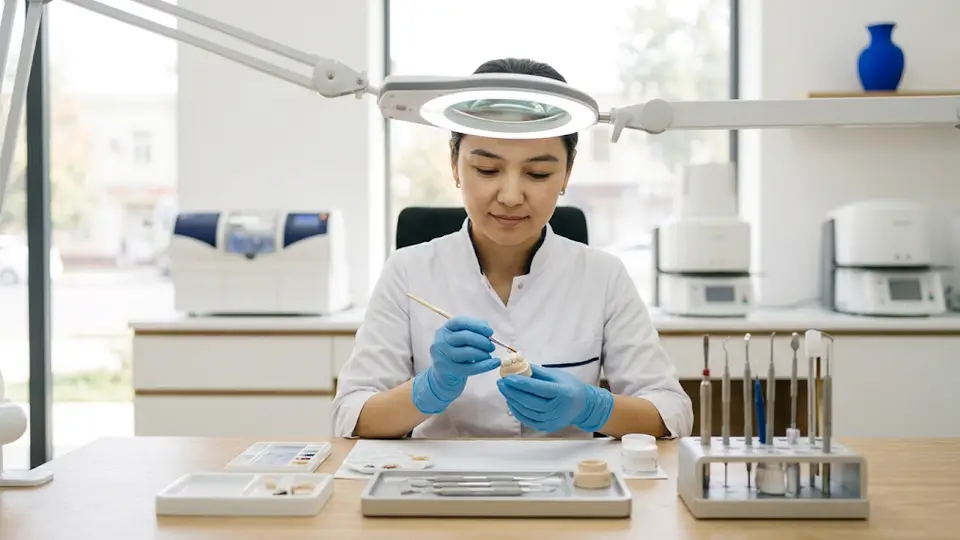
Cavity treatment in Uzbekistan in 2026 ranges from 80,000 to 600,000 UZS per tooth, depending on the decay stage, filling material, and clinic tier. A standard composite filling at a mid-range Tashkent clinic costs around 150,000–250,000 UZS, while a premium photopolymer restoration at a private dental center runs 400,000–600,000 UZS. Clinics in regional cities like Samarkand, Namangan, and Bukhara are typically 20–40% cheaper than the capital.
Dentists classify cavities in four stages: initial (white spot on enamel, no cavity yet), superficial (enamel only), moderate (into dentin), and deep (near the pulp). Early-stage cavities cause little or no pain and are treated quickly and cheaply. Moderate and deep cavities require local anesthesia — modern clinics use carpule anesthetics (articaine, ultracaine) that make the injection nearly imperceptible.
See a dentist promptly if you notice: sensitivity to cold, hot, or sweet foods; a visible dark spot or hole in a tooth; dull spontaneous toothache; or if it's been over six months since your last check-up. Delayed treatment allows cavities to progress to pulpitis, which requires root canal therapy costing 500,000–1,500,000 UZS plus a crown — several times more expensive.
For dental tourists from Russia, Kazakhstan, China, and beyond, Uzbekistan offers a compelling combination: costs 2–4 times lower than in Moscow or Almaty, modern equipment in accredited facilities, and easy access to historic cities. Tashkent's dental district near Chilanzar and several Samarkand clinics already cater specifically to international patients.
Disclaimer: This article is for informational purposes only and does not replace professional dental advice. Only a licensed dentist can provide an accurate diagnosis after examination and X-ray. Use Dentum to find a clinic by ratings and reviews and book online for free.
- Price ranges: Dentum catalog data — clinics of Uzbekistan (2GIS/OpenStreetMap), snapshot of 30.06.2026.
Online booking
Book a dentist online
Pick a day and time — you get a request number instantly.
We match a clinic and call you back
Choose a time- Free
- Instant request number
- Telegram reminder